Chiropractic Video Marketing and Video Marketing for Chiropractors Without Filming
New patients ask the same things before they book: what happens on the first visit, whether an adjustment hurts, how many visits a back problem takes, what insurance covers. You answer them at the front desk every day. Paste those answers into VidUp and get a narrated, captioned video for your website, Google profile, and social pages, without filming between adjustments.
This is your video, rendered from the text above: s, voiced by , music bed. The preview is short and carries the VidUp mark.
Paste your own text and hit Make the video. Create your account for the clean 1080p file, in every size.
In short
Chiropractic video marketing means publishing short videos that answer what people with back pain, neck pain, or headaches ask before they choose a chiropractor, then pointing them to your booking page: condition explainers, first visit walkthroughs, home care tips, and insurance and pricing answers. VidUp makes those videos from text. Paste a condition page, a new patient FAQ, or a blog post and it returns a 1080p MP4 with an AI voiceover, burned-in captions, licensed stock footage, and music, in 9:16 for Instagram, Facebook, and TikTok and 16:9 for your site and YouTube. It costs a flat $49 a month for about 15 to 20 videos, with no credits and no shoot days.
US chiropractors and multi-doctor chiropractic clinics that want a video on every condition page and new patient question without filming between adjustments.
A video for every condition page you rank for
Lower back pain, sciatica, neck pain, headaches, auto injury, pregnancy care, sports injuries. Each is a page a patient lands on from search. VidUp turns the text on that page into a 45 to 90 second video that keeps them there long enough to book.
Answers the questions that stop people from booking
Does it hurt, is it safe, how many visits, what does it cost, do you take my insurance. A one minute video at the top of the new patient page answers them before the visitor leaves for the next clinic in the map pack.
One flat monthly cost, no camera at the clinic
A videographer bills per shoot and a chiropractic marketing agency bills a retainer. VidUp is a flat plan with no credits, and one new patient who completes a care plan covers months of it.
From a patient question to a published chiropractic video
Pick a question patients ask every week
What happens at the first visit, what causes sciatica, why posture at a desk causes neck pain, whether chiropractic care helps after a car accident. Write the answer in 120 to 250 plain words, the way you explain it on the table.
Keep claims general and accurate
Describe how you assess and treat, who usually benefits, and what a visit involves. Leave out promises of a cure and guaranteed outcomes, and close with your clinic name, city, and how to book.
Paste it into VidUp
VidUp voices the script, burns in captions, matches licensed stock footage of stretches, desk work, running, and clinic scenes to each line, adds music, and exports 9:16, 1:1, and 16:9 in one pass. The brand kit adds your logo and colors.
Publish it where patients decide
Put the 16:9 file on the matching condition page and YouTube, post the vertical cut to Instagram, Facebook, and TikTok, add it to your Google Business Profile, and send the first visit video in the booking confirmation email.
Chiropractic marketing videos that fill the schedule
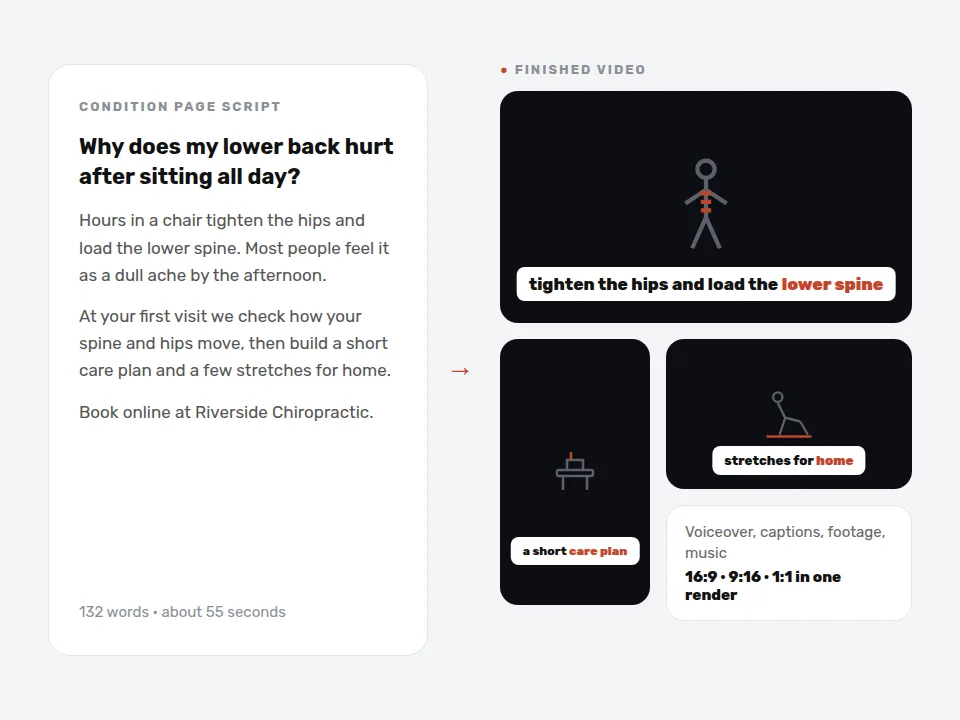
The chiropractic videos that bring in new patients answer a problem someone has today. An office worker whose neck is stiff by noon every day. A runner with pain down one leg. A driver who was rear-ended last week and wants to know if a chiropractor can help. A one minute video with a plain answer and a link to book reaches that person while they are still comparing clinics, and it keeps working on your condition page for years.
Start with the conditions you treat most and the questions your front desk hears most. For most practices that is one explainer per condition page, a first visit walkthrough, a short series of home care stretches to send after an adjustment, and an insurance and pricing video. The scripts are text you already have: your condition pages, the new patient packet, email replies, and your newsletter.
Condition explainers
Lower back pain, sciatica, neck pain, headaches, auto injury, pregnancy and pediatric care. One video per condition page, general and accurate.
First visit walkthrough
Paperwork, consultation, exam, whether X-rays are needed, and what an adjustment feels like. The video that turns a nervous visitor into a booked appointment.
Home care and posture tips
Desk setup, gentle stretches, sleeping positions, lifting basics. Short vertical videos patients save and share, sent after each visit.
Insurance, pricing, and care plans
What insurance usually covers, cash prices, package plans, and auto injury billing. The questions people feel awkward asking on the phone.
Adjustment demonstrations of your patients
Not a fit. Real adjustments on real patients need you, a camera, and a signed authorization from the patient. Film those yourself.
Patient testimonials
Not a fit. A testimonial has to be a real patient in their own words, with written permission. Record them on a phone at the clinic.
Where chiropractor videos turn searches into booked visits
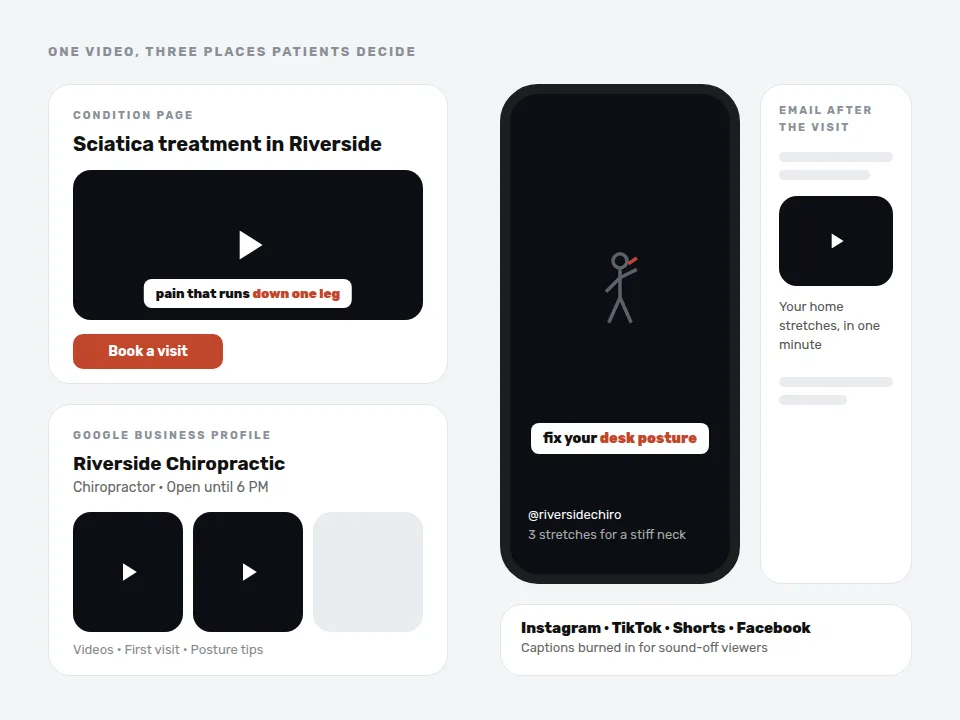
Your website and Google Business Profile are where a local searcher decides. Put each condition video above the booking button on its own page, and add videos to your Google profile, where people compare clinics in the map results. A page with a clear one minute answer gives a visitor a reason to book with you instead of the next listing.
Instagram, Facebook, TikTok, and YouTube Shorts are where people in your town see you before they have a problem. A captioned 30 to 60 second tip every week, a stretch, a desk posture fix, a myth answered, keeps the clinic in front of them. Most people watch with the sound off, so burned-in captions matter.
Email, text, and the waiting room are the quiet wins. Send the first visit video with the booking confirmation, the stretch video after each adjustment, and play the series on the waiting room screen. Long articles on your site convert to video through the blog to video workflow, and clinics that also run physical therapy or massage can see the wider approach on the healthcare video marketing page.
Keeping chiropractic videos within advertising rules, and when to film yourself
A marketing video is an advertisement, and the rules that apply to your website apply to it. The FTC expects health claims to be truthful and backed by competent and reliable scientific evidence, and its endorsement guides cover testimonials and results that are not typical. State chiropractic boards add their own advertising rules, and using a patient story, photo, or video for marketing generally needs the written authorization HIPAA describes. VidUp reads exactly the script you write and adds no claims of its own, so describe what you assess and treat, avoid words like cure and guaranteed, never name or show a patient without written permission, and check your state board rules before you publish.
Some videos should still show you. A clinic tour, a short introduction from each doctor, and patient testimonials build trust because people see who will treat them. VidUp uses licensed stock footage and does not accept uploads, so it will never show your face, your table, or your office. A realistic mix is one phone video a week from you plus a steady library of VidUp explainers built from your condition pages and patient answers. Dental and medical practices with the same problem are covered on dental video marketing.
Ways chiropractors produce marketing videos, compared
Four realistic ways for a chiropractor or multi-doctor clinic to publish video every week. VidUp prices are current list prices. Videographer and agency prices vary by market and are quoted.
| Approach | What it takes | Cost | Best for | Trade-off |
|---|---|---|---|---|
| Film yourself on a phone | Talking points, a quiet room between patients, editing and captions | Your time | Clinic tours, doctor intros, testimonials with permission | Hard to keep weekly on a full schedule, and editing and captions take longer than filming |
| Local videographer | Scheduling, a shoot day at the clinic, edits, review rounds | Quoted per project | A brand film or a batch of on-camera videos once or twice a year | Highest cost per video, and the clinic closes for the shoot |
| Chiropractic marketing agency | A monthly retainer that bundles social posts, ads, and video | Monthly retainer, quoted | Clinics that want marketing handed off completely | Template content shared across many clinics, and long contracts |
| VidUp | Paste a condition page, FAQ answer, or blog post | $49 a month ($24 yearly) for about 15 to 20 videos; Growth $99 for about 50 with 2 seats | Condition explainers, first visit walkthroughs, home care tips, insurance answers | Stock footage, not your face, your table, or your patients |
Keep every video general, avoid cure and guarantee claims, never show or name a patient without written authorization, and check your state board advertising rules.
Related pages
More use cases
Related features
The questions buyers ask before they pick a video tool, answered straight.
How do chiropractors use video marketing?
Chiropractors use video to answer patient questions before the first visit and to stay visible in their town. Common formats are condition explainers on each service page, a first visit walkthrough, home care and posture tips for social media, insurance and pricing answers, clinic tours, and patient testimonials recorded with written permission.
What videos should a chiropractor post?
Post one explainer per condition you treat, a first visit video for the new patient page, weekly posture and stretch tips for Instagram, Facebook, and TikTok, and an insurance and cost video. Add a clinic tour and doctor introductions filmed on a phone, since people want to see who will treat them.
Is video marketing worth it for chiropractors?
For most practices, yes, because new patients choose a clinic on trust and a video answers their worries faster than text. The cost question is production. A shoot day or agency retainer is hard to justify every month, while scripted explainers made from text you already have keep the cost to a flat monthly plan.
Can chiropractors use patient testimonials in videos?
Yes, with care. Get written authorization before using any patient name, image, or story, since HIPAA treats marketing use of patient information as needing permission, and follow the FTC endorsement guides and your state board rules on testimonials and results. Avoid presenting one result as typical.
How much does chiropractic video marketing cost?
It ranges from your own time for phone videos to quoted projects from videographers and monthly retainers from chiropractic marketing agencies. VidUp is $49 a month, or $24 a month billed yearly, for about 15 to 20 finished videos, and Growth is $99 for about 50 with 2 seats, with no credits and no per-video fees.
How long should a chiropractic marketing video be?
Social tips work best at 30 to 60 seconds and condition explainers for a website or YouTube at 60 to 120 seconds. A script of 150 to 250 words makes a video of about one to one and a half minutes, which is enough to explain a condition and invite the viewer to book.
Make your first video
Paste a script, a blog post, or a product URL and VidUp builds a finished short with voiceover, captions, footage, and music, auto-sized for every platform. Flat plan, no credits.