Video Marketing for Manufacturers and Industrial Video Marketing Without a Film Crew
Engineers and buyers research for weeks before they ever call your sales team, and most of what they want to know is already written down: spec sheets, application notes, case studies, distributor training decks. Paste that text into VidUp and get a narrated, captioned explainer for your product pages, LinkedIn, YouTube, and distributor portal, without shutting down a line for a film crew.
This is your video, rendered from the text above: s, voiced by , music bed. The preview is short and carries the VidUp mark.
Paste your own text and hit Make the video. Create your account for the clean 1080p file, in every size.
In short
Video marketing for manufacturers means publishing short videos that answer what engineers, plant managers, and procurement teams ask while they shortlist suppliers: what a product does, which applications it fits, how it compares with the alternative, and what the lead time and certifications are. VidUp makes those explainers from text. Paste a product page, an application note, or a case study and it returns a 1080p MP4 with an AI voiceover, burned-in captions, licensed stock footage of industrial settings, and music, in 16:9 for your site and YouTube and 9:16 and 1:1 for LinkedIn. It costs a flat $49 a month for 30 videos, with no credits and no shoot days.
US manufacturers, contract manufacturers, and industrial suppliers with long B2B sales cycles that want an explainer on every product family and application page without stopping a line for a shoot.
A video for every product line and application
Industrial buyers land on a product family page, an industry page, or an application note from search. VidUp turns the copy already on that page into a 60 to 120 second explainer that keeps an engineer on your site instead of a competitor's catalog.
Sales and distributor enablement at the same cost
The same explainers go to distributor reps, inside sales, and trade show screens. When a product changes, you edit the script and render again instead of booking another shoot.
One flat monthly cost, no line shutdown
A production company quotes per shoot day and a plant tour means stopping work and clearing safety. VidUp is a flat plan with no credits, and one new distributor or one closed project covers years of it.
From a spec sheet to a published manufacturing video
Pick a page buyers already read
A product family page, an application note, an industry page, or a case study. Cut it to 150 to 300 words: the problem, what the product does, where it fits, and what the buyer should do next.
Keep every number checkable
Use the tolerances, ratings, certifications, and lead times your spec sheet already states, and nothing your engineering team has not signed off. Close with the part number family and how to request a quote.
Paste it into VidUp
VidUp voices the script, burns in captions, matches licensed stock footage of machining, assembly lines, warehouses, labs, and job sites to each line, adds music, and exports 16:9, 1:1, and 9:16 in one pass. The brand kit adds your logo and colors.
Publish where buyers shortlist
Put the 16:9 file on the product page and YouTube, post the square or vertical cut to LinkedIn, load the series into your distributor portal and trade show loop, and send it in the follow-up after an RFQ.
Manufacturing marketing videos that move an RFQ forward
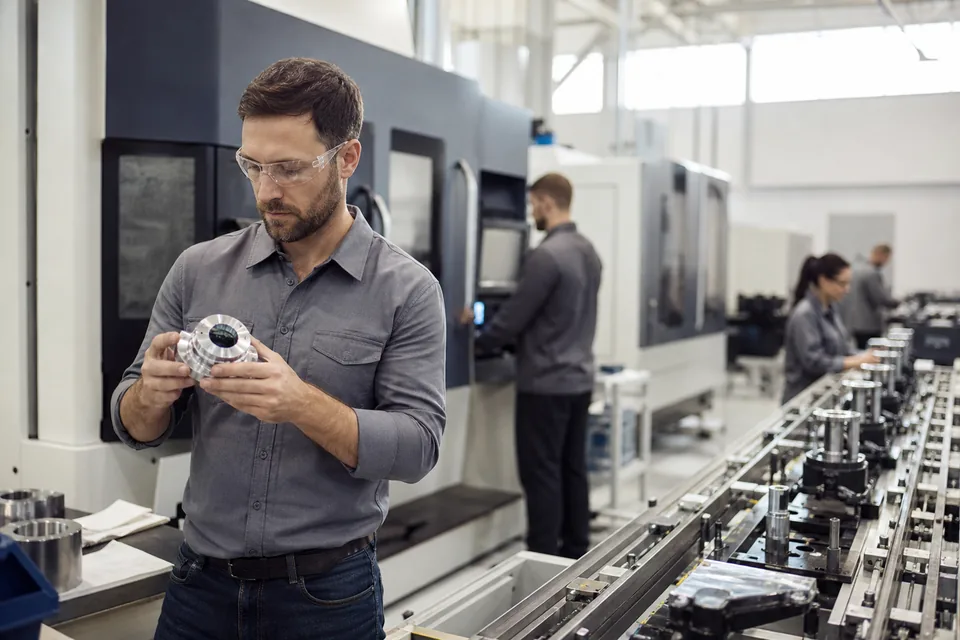
Industrial sales cycles are long and committee driven. A design engineer finds you, a plant manager asks whether it fits the line, procurement compares three suppliers, and a quality lead checks certifications. Each of them has a different question, and most of them will not call until the answers are clear. A short explainer per question, published where they look, does the first round of selling before your rep is in the room.
Start with the pages that already get traffic and RFQs. For most manufacturers that is one explainer per product family, one per major application or industry served, a capabilities overview for contract and job shops, and a short video version of your best case study. The scripts are text you already have: catalog copy, application notes, quote follow-up emails, and the slides your distributor training uses.
Product family explainers
What the product does, key specs, options, and where it fits. One video per family page, written from the catalog copy your engineers approved.
Application and industry videos
Food and beverage, automotive, medical device, aerospace, energy. One video per industry page showing the problem and how your product solves it.
Capabilities overview
For contract manufacturers and job shops: processes, materials, tolerances, certifications such as ISO 9001 or AS9100, and lot sizes, in two minutes.
Distributor and rep training
New product launches, feature changes, and competitive positioning for your channel, updated by editing the script instead of reshooting.
Your plant, your line, your machines
Not a fit. A factory tour or a demo of your own equipment needs real footage. Film those on site, and use VidUp for the explainers around them.
Customer testimonials
Not a fit. A testimonial has to be the customer in their own words, with their approval. Record it on a call or at their facility.
Where industrial videos reach engineers and buyers
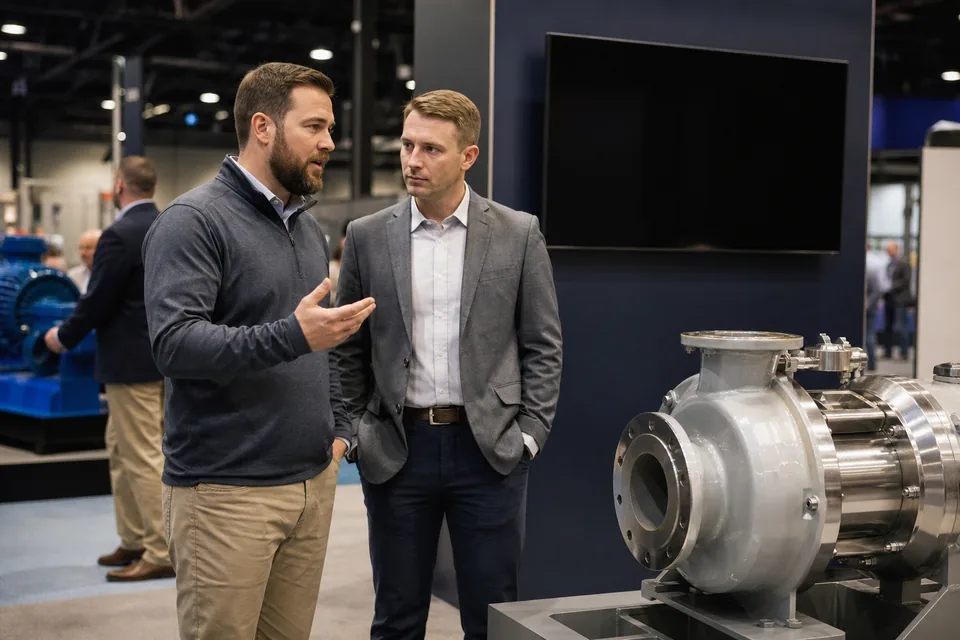
Your product pages and YouTube are where engineers research. Put each explainer above the spec table and the quote button on its own page, and publish the same file on YouTube with the product name in the title, since YouTube is a search engine engineers use for how something works. A clear two minute answer keeps a qualified visitor on the page long enough to request a quote.
LinkedIn is where plant managers, buyers, and engineers in your industries scroll during the workday. A captioned 45 to 90 second explainer every week, a new application, a spec that matters, a common sizing mistake, keeps you in front of them between projects. Most people watch with the sound off at work, so burned-in captions matter.
Distributors, trade shows, and sales follow-up are the quiet wins. Load the series into your distributor portal, loop it on the booth screen, and attach the matching video to every RFQ follow-up. Long technical articles convert through the blog to video workflow, and teams turning training decks and work instructions into video can see the SOP to video page.
Keeping manufacturing videos accurate, and when to film on site
A marketing video is an advertisement, and the FTC expects performance claims to be truthful and backed by evidence, the same as your catalog. The practical rule is simple: every number in the script should come from a spec sheet or test report your engineering and quality teams already approved. Phrases like Made in USA have their own FTC standard (all or virtually all), so only use them if your product qualifies. If a product is export controlled under ITAR or EAR, keep controlled technical data out of public videos entirely. VidUp reads exactly the script you write and adds no claims of its own.
Some videos should still show your real operation. A plant tour, a demo of your own machine running, and a customer at their facility build trust that stock footage cannot, because buyers want to see who will make their parts. VidUp uses licensed stock footage and does not accept uploads, so it will never show your floor or your equipment. A realistic mix is one or two filmed pieces a year plus a steady library of VidUp explainers built from your product and application pages. Contractors and trades with the same problem are covered on video marketing for contractors.
Ways manufacturers produce marketing videos, compared
Four realistic ways for a manufacturer or industrial supplier to publish video every month. VidUp prices are current list prices. Production company and agency prices vary by region and scope and are quoted.
| Approach | What it takes | Cost | Best for | Trade-off |
|---|---|---|---|---|
| Film in house on a phone | Someone on the marketing team, safety clearance on the floor, editing and captions | Staff time | Quick machine clips, trade show recaps, behind the scenes | Editing, captions, and approvals take longer than filming, so it rarely stays weekly |
| Industrial video production company | Scripting, a shoot day at the plant, edits, review rounds | Quoted per project | A plant tour, a brand film, a hero product demo once or twice a year | Highest cost per video, and the line or the lab stops for the shoot |
| Industrial marketing agency | A monthly retainer that bundles content, ads, and some video | Monthly retainer, quoted | Manufacturers that want marketing handed off completely | Video is a small part of the retainer and slow to update when a product changes |
| VidUp | Paste a product page, application note, or case study | $49 a month ($24 yearly) for 30 videos; Growth $99 for 75 with 2 seats; Pro $199 for 200 with 3 seats | Product family explainers, application videos, distributor training, LinkedIn | Stock footage, not your plant, your line, or your machines |
Use only specs your engineering team approved, check Made in USA wording against the FTC standard, and keep export-controlled technical data out of public videos.
Related pages
More use cases
Related features
The questions buyers ask before they pick a video tool, answered straight.
How can manufacturers use video marketing?
Manufacturers use video to answer engineering and buying questions before a sales call: product family explainers on each catalog page, application and industry videos, capabilities overviews for contract work, case study summaries, distributor and rep training, trade show loops, and LinkedIn posts. Plant tours and machine demos are filmed on site; explainers can be made from existing text.
What types of videos work best for manufacturing companies?
Product explainers, application videos, and capabilities overviews do the most selling, because they answer what an engineer or buyer needs to shortlist you. Case study videos help with committee decisions, and a plant tour builds trust in quality. Keep explainers at 60 to 120 seconds and put each one on the page it explains.
Is video marketing worth it for B2B manufacturers?
For most industrial companies, yes, because buyers do much of their research before contacting a supplier and a short video answers it faster than a PDF. The cost question is production. A shoot day is hard to repeat every month, while explainers made from approved catalog copy keep the cost to a flat monthly plan.
How much does manufacturing video production cost?
Filmed work from an industrial video production company is quoted per project and depends on crew days, locations, and animation. Agency retainers are quoted monthly. VidUp is $49 a month, or $24 a month billed yearly, for 30 finished explainer videos, Growth is $99 for 75 with 2 seats, and Pro is $199 for 200 with 3 seats, with no credits.
Should manufacturers post videos on LinkedIn?
Yes. LinkedIn is where engineers, plant managers, and procurement teams spend work time, and native video reaches them between projects. Post a captioned 45 to 90 second explainer each week in square or vertical format, since many people watch with sound off, and link to the product page with the quote form.
Can AI make a factory tour video?
No tool can show your real factory without footage of it. AI video tools that use stock footage, VidUp included, make explainers about your products and applications, not a tour of your plant. Film the tour once with a crew or a phone, and use AI explainers for the many product and application pages around it.
Make your first video
Paste a script, a blog post, or a product URL and VidUp builds a finished short with voiceover, captions, footage, and music, auto-sized for every platform. Flat plan, no credits.